Camalonga (Thevetia peruviana)
About the plant
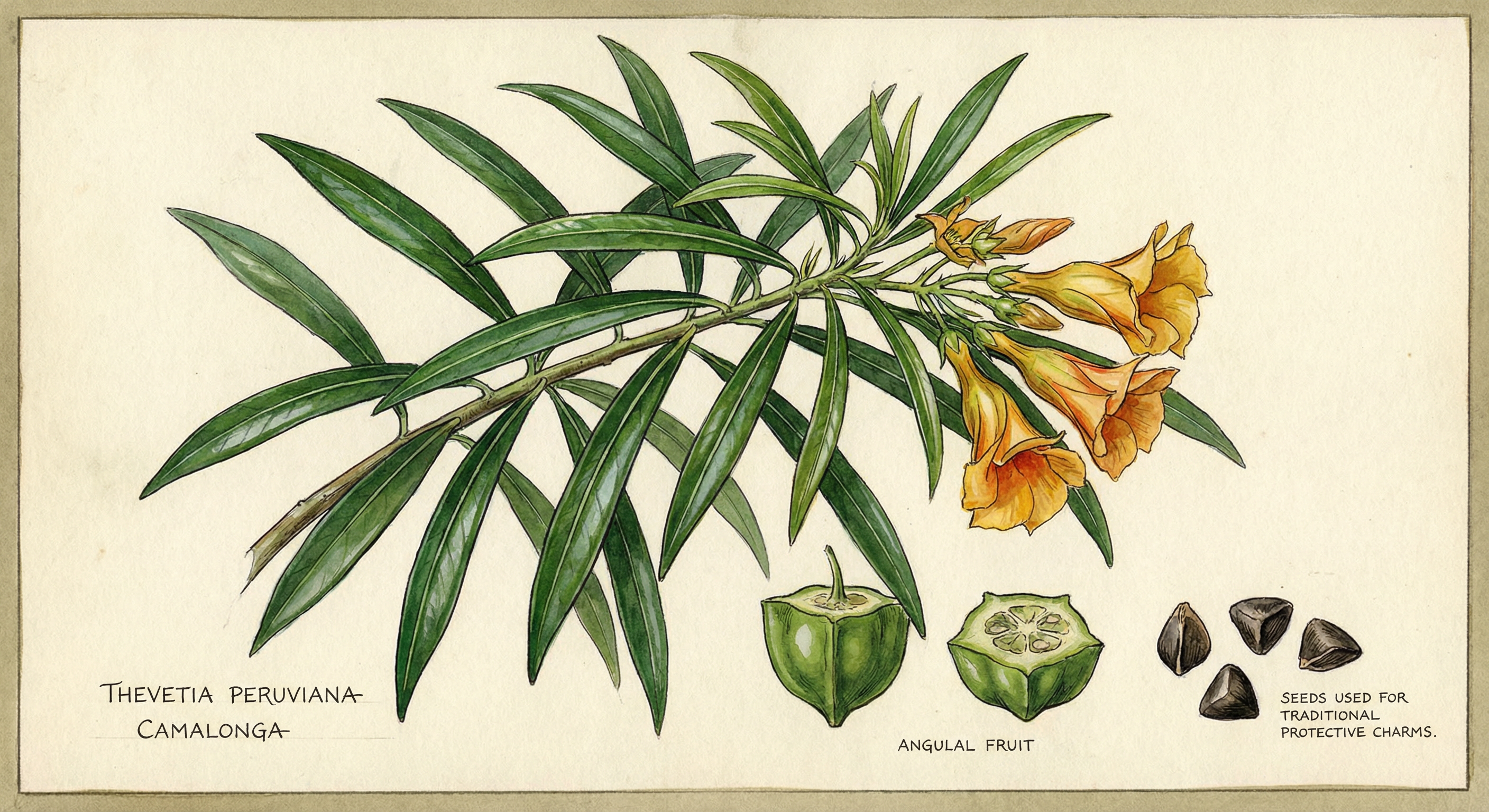
Camalonga (Thevetia peruviana) is a tropical tree in the Apocynaceae family, yellow oleander; English names include 'be still tree'. Characteristic funnel-shaped yellow flowers; green fruits with a single seed. Seeds and other parts contain cardenolides (cardiac glycosides) similar in mechanism to digoxin. Native to American tropics; widely cultivated as ornamental.
Properties and use
In tradition camalonga is famous for its ability to reflect negativity: in dieta an invisible filter is said to form around the person — others' projections, envy, evil intentions bounce back. So camalonga is often dieted by healers who face others' negativity or 'black magic'. Seeds are used as a spiritual and protective remedy; internal use in folk practice is dangerous due to toxicity.
Use in dietas
Dieta with camalonga aims to strengthen boundaries and reflect harmful influences without taking them in. The plant is considered a strict teacher of protection. Duration and form of intake are determined only by the maestro; self-administered use of seeds or extracts is not acceptable.
Precautions
All parts of Thevetia peruviana are poisonous: cardenolides (thevetin A and B, peruvoside, etc.) cause severe cardiac, neurological, and gastrointestinal effects; death is possible. Seeds are most toxic. Drying and heating do not inactivate the poison. Never ingest without guidance of a traditional healer who knows this lineage; contraindicated in pregnancy and heart disease.